Free Homeschooling Curriculum
The Best Home School Resources
Trying out a free homeschooling curriculum is a great way to find out what suits you and your child best.
Especially as it will save spending lots of money on something which may not work!
Here's a list of the ones which get top marks.
At the bottom of the page you'll see lots of answers from fellow homeschoolers to the question Jennifer asked about which homeschool curriculum to use.
And it's important to note that many of those who answered said they followed no set curriculum at all!
Here's Jennifer's question:
"Which home-school curriculum do you use? ... We are in K-12, I mean, I want my son to learn as much as he can, but this is nonsense, just, ridiculous!
They do not allow me time to teach him at the pace he needs to be taught, so many dead lines and classes that it is almost more stressful than b&m public schools. We need a change. Thanking you in advance."
~ Jennifer
Free Home School Curriculums

Ambleside Online is a free home school curriculum designed to be as close as possible to the curriculum Charlotte Mason used. The curriculum uses as many free online books as possible, and there is no cost to use this information or join the support group.

"easy peasy homeschooling is a free site that I am using with my son to homeschool him...it is great."
~ April
April, Tressa and Laurie are just three of the people I know who recommend Easy Peasy, which is a complete, free online Christian homeschool curriculum.

Most states offer some type of online public school courses to resident students. Some states offer full online high school diploma programs, while others offer a limited number of virtual courses.
This state-by-state list of online public school programs includes state-wide online schools, online charter schools, and online private schools that receive government funding for in-state students.

Free-Ed.Net is a source of free online courses and other study resources that cover virtually all trade and academic subjects commonly found in the curriculum followed by traditional schools and universities.

Mater Amabilis is a Charlotte Mason style curriculum for Catholics. It covers pre-Kindergarten to 8th Grade (ages 4-14).

A K-5 curriculum with over 900 weekly topic units containing free educational resources found on the web. Has a Planning Tool and covers science, history, math and language arts.

One of the most popular virtual public school programs for homeschooling grades K-12. Visit the company’s website to find out if this online charter school is available in your state.

One of the leading online public school homeschooling curriculum programs which works across all States.
Which Homeschool Curriculum?
When you're working out which free homeschooling curriculum to choose, it's worth looking at the answers Jennifer got to this question on my Facebook page:
This is what people wrote:
"I don't follow a curriculum, I follow her interests as I find she takes a lot more in if she's interested in the subject" ~ Charlotte
"We use a bunch of different curriculum. Different items for different subjects/needs. Grade leveled, boxed sets just don't work for us, so we have an eclectic approach." ~ Denise
"I don't follow a curriculum either. I just work to their interests too. Find that works better for us." ~ Jane
"Several Beautiful Feet Books is amazing for history, math-u-see, and all about reading/spelling. We add a few extras or course science depending on the year apologia or answears in genius. But we notebook/lapbook as a proof of learning and that makes it much more enjoyable. We have a Charlotte Mason approach but adapt it to our needs. If you are called to homeschool don't give up. Praying for you and your family!!" ~ Jeannine
"We use Sonlight, which is a literature based program, for our core subjects with Singapore Math and some other things added in. I love it!" ~ Alicia
"We never test, and now only piece together curriculum as needed. My suggestion to you is to research deschooling. If you're removing your child from virtual public schooling (which k-12 is) you'll both need a period of transition into homeschooling....Take time to find what fits the two of you best. You both can help chose what will make you grow and be happy. We use Ambleside Online to help guide us. Other than that, I find the things I think will fit our style best. Rainbow Resource is a great place to research and purchase curriculum from." ~ Laurie
"A lot of my friends use a christian based curriculum called, Abbeka, i've looked into it, and its the one i'll be using next year" ~ Christiane
"Jennifer, we are in GA K12 8th grade Montgomery Academy. I totally understand your frustrations with K12 pacing. This being or first year The state testing is a great unknown and going forward how do I make sure the program is accredited so a formal high school diploma will be issued and recognized by a college. I wish you luck in your search." ~ Kelly
"We
use Saxon Math, Explode the Code for reading instruction, daily
journals and report assignments for writing, ixl.com for grammar,
Sequential Spelling, and Layers of Learning for our other subjects." ~ Layers of Learning
It is interesting that out of more than 10,000 of my Facebook fans, the people who wrote that they used no set course got by far the most likes, so it's definitely worth looking at your free homeschooling curriculum options before you buy anything.
Free Homeschooling Curriculum Resources
Free home school unit studies for ages 2 through 8, for a variety of subjects. Also includes a section for lapbooks and Five in a Row resources. You can also have a look at our free homeschool unit studies on Ocean Creatures and Rainforest Activities For Kids.
The Biology Corner is a resource site for biology and science teachers. It contains a variety of lessons, quizzes, labs, web quests, and information on science topics which you can use to create your own free homeschooling curriculum. You can find lessons related to biology topics for different courses including AP Biology, Freshman Level Biology, Anatomy and Physiology, and an Introductory Physics class.
You'll find the top math websites for kids in our page on online math activities.
Free Homeschooling Curriculum Resources
Our page on free homeschooling resources covers the top three homeschooling sites, language learning and freebies for all subjects.
Love this page? Help me spread the word by sharing...
Homeschooling › Worksheets › Curriculum
"Just had a look through your monthly
newsletter focusing on math. Thanks so much for all the links and
ideas. It's brilliant!" ~ Diana
"Hi....I totally love all your posts and enjoy reading them....the kids love the activities and enjoy them through and through." ~ Bianka




Free Newsletter
Must-have Handbook
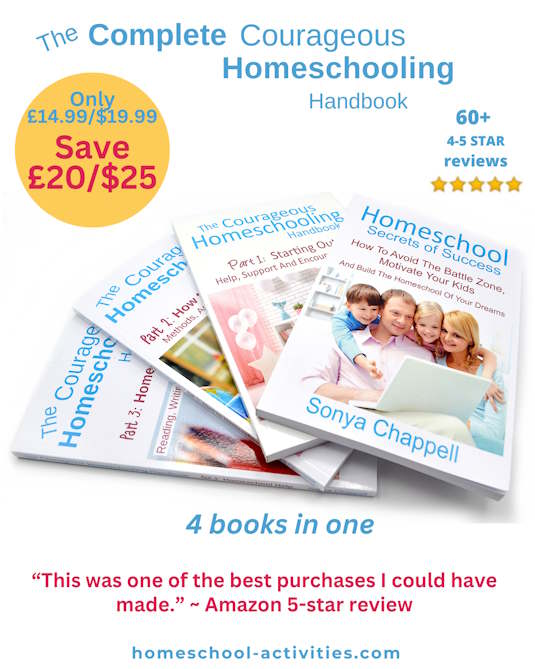
4 books in one: Bargain discount deal!
"With the education system failing so many brilliant
children it's great to be able to have resources like your website for
inspiration, ideas and just a sense of belonging. What you are doing for
your children is priceless." ~ Natalija
"I really appreciate your time and effort that goes into your posts... It's nice to see that you are a 2nd generation homeschooler." ~ Teresa
"Your newsletters & book have helped us through our journey. For that I can only thank you.
Please, please, please keep it up, people like you make our home school life so much easier." ~ Kelly
"I have joined paid sites that were not even one percent as great as
this site. Really amazing what you are doing and so so helpful thanks so much!" ~ Eli
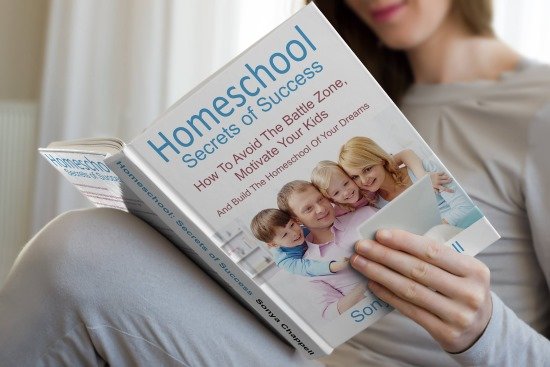

My highly recommended book Homeschool Secrets of Success.

© Copyright 2010-2025 Homeschool-Activities.com. Content by Sonya Chappell. All rights reserved.
N.B. Please note that some of the links on this site are affiliate links so if you buy you will pay exactly the same price as you would have done but I get a small percentage of the sale (which usually adds up to the cost of a cookie). If you would prefer not to support this site in that way, just go to Google and search for the product yourself.
Click to read my Privacy Policy, Terms and Conditions.